

Privacy Act Requests for Federal Employees: How to Access Your Records
Federal employees, and former federal employees, often need access to personal records maintained by government agencies. These records may include an Official Personnel Folder (OPF), security clearance files, or documents related to administrative investigations.
At our firm, we are frequently retained to assist clients in obtaining these records. This article provides a general overview of the Privacy Act and how it applies to federal employees. Because every situation is unique, individuals should consult an attorney experienced in Privacy Act matters before submitting a request.
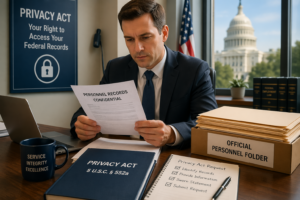
What Is the Privacy Act?
The Privacy Act of 1974, codified at 5 U.S.C. § 552a, governs how federal agencies collect, maintain, use, and disclose personal information. In general, the law prohibits agencies from releasing records about an individual without their consent, unless a specific exception applies.
One key exception allows individuals to request access to their own records:
- 5 U.S.C. § 552a(d)(1) grants individuals the right to review and obtain copies of records maintained about them.
The Privacy Act is often compared to the Freedom of Information Act (FOIA), but they serve different purposes:
- Privacy Act → Access to your own personal records
- FOIA → Access to government records not specific to you
In some cases, submitting a request under both the Privacy Act and FOIA can be beneficial, depending on the type of records sought.
Key Differences Between the Privacy Act and FOIA
Understanding the distinction between these two laws is important:
- Agencies often do not charge search fees under the Privacy Act
- Agencies may charge copying fees
- FOIA requests may involve broader access but can include search and processing fees
Because of these differences, strategic use of both statutes can improve results.
What Records Can Federal Employees Request?
The Privacy Act allows individuals to request existing records about themselves. However, agencies are not required to create new documents in response to a request.
Common examples of requested records include:
- Background investigation reports
- Security clearance files
- Security clearance database records (DISS and Scattered Castles)
- Administrative or internal investigation records
- Official Personnel Folder (OPF)
- Disciplinary action records
There are many additional types of records that may be available depending on the agency and circumstances.
How to Submit a Privacy Act Request
Privacy Act request requirements vary by agency, but most requests must include the following information:
- Full legal name
- Date and place of birth
- Social Security Number (often required for identification)
- Current mailing or email address
- Signature
- A detailed description of the records requested (specificity is critical)
- A sworn declaration or notarized statement
- Copies of identification documents
Because requirements frequently change and errors can delay processing, working with experienced legal counsel is strongly recommended, especially for complex or sensitive matters.
Why Legal Guidance Matters
Privacy Act requests can become complicated when dealing with:
- Security clearance issues
- Adverse personnel actions
- Investigations or disciplinary records
- Missing or incomplete files
An attorney familiar with federal employment law and Privacy Act procedures can help ensure:
- Proper formatting and submission
- Strategic use of FOIA alongside the Privacy Act
- Faster and more complete responses
- Protection of your legal interests
Contact Us
If you need assistance preparing a Privacy Act request or obtaining federal employment records, our office can help.
Call: (703) 668-0070
Website: www.berrylegal.com
Schedule a consultation today to discuss your situation with an experienced attorney.

